
Do more with the fuel you already buy — then measure whether it actually worked.
X-Carbon is a combustion efficiency product from Run-Green International, developed over more than twenty years of R&D by a team of scientists and fuel experts, with John Fenton as CEO. It is used in engines running diesel, petrol or kerosene.
A UK haulage audience has heard a lot of fuel-additive promises. So this page leads with what independent testing found, states Run-Green's own performance claim as theirs rather than ours, and recommends you prove it on a sample of your own vehicles before spending anything at scale.
Sources: RunGreen — about X-Carbon and RunGreen — company background.
Justin Cox acts as an agent for Run-Green International.
CouriersDepot.com introduces operators to Run-Green International and does not provide financial, insurance or energy advice, arrange contracts, quote prices or guarantee savings. Run-Green are responsible for the advice, terms, technical claims and pricing they give you.
Any efficiency or savings figures on this page are Run-Green's own published claims and are attributed to them wherever they appear. They are not CouriersDepot's claims and are not presented as established fact. Results vary by fleet, site and duty cycle.
The first question about any fuel product is whether it damages the fuel. Independent testing addressed that.
This is the part that matters to an engineer or a transport manager, and it is the reason X-Carbon is worth a conversation at all. All three results below are as reported by Run-Green.
Zero change to specification
Run-Green report that EN590 testing — the European standard for automotive diesel — showed zero change to the fuel specification with X-Carbon added.
The same result on the US standard
Run-Green report the same outcome under D-975, the American diesel fuel specification: no change to the fuel itself.
Samples still met specification
Run-Green report that AmSpec, testing diesel, gasoline, kerosene and marine gas oil in 2023, found samples still met required specifications after X-Carbon was added and remained fundamentally unchanged.
Sources: RunGreen — is X-Carbon safe to use (EN590 and D-975), RunGreen — 2023 AmSpec tests. CouriersDepot has not commissioned or verified these tests and reports them as Run-Green's published statements.
What the testing does and does not show. It addresses the safety question — whether adding X-Carbon takes the fuel out of specification. Run-Green report that it does not. Fuel specification testing is not the same thing as a performance measurement, and it does not by itself demonstrate any particular MPG improvement on your vehicles. That is what a trial is for.
Here is what Run-Green publish, and here is what we will not do with it.
We would rather be straight with you than repeat a headline number as though it were ours.
Run-Green's own published claims
- Run-Green report that X-Carbon can cut fuel costs and improve MPG by up to 30%+. That is Run-Green's published claim about their own product.
- Run-Green also report reduced emissions and a reduced need for maintenance.
- Run-Green describe X-Carbon as restoring an engine toward its manufactured standards, using Boost first and then Regular to maintain it.
Source: RunGreen — about X-Carbon, RunGreen — Boost and Regular.
What CouriersDepot says about them
- That figure is not our claim. We do not adopt it, endorse it as fact, or offer any savings figure of our own.
- Results vary by fleet, duty cycle and vehicle condition. A tired urban multi-drop fleet and a well-maintained trunking fleet will not behave the same way.
- Justin recommends a measured trial on a sample of vehicles before any fleet-wide commitment. If a trial on your vehicles shows nothing, that is your answer.
- We are an introducer and an agent for Run-Green — not an independent tester and not a technical adviser.
Why we are being this careful. Fuel-efficiency products have a long and mixed history in UK road transport, and operators are right to be sceptical. The credible case for X-Carbon rests on the independent fuel specification testing and on what a measured trial shows on your own vehicles — not on a percentage in a headline. If anyone, including us, presents a savings figure as a promise, treat it as marketing.
A measured trial on part of the fleet, against a baseline you already hold.
This is the whole reason lever one comes first. Fuel card data gives you per-vehicle consumption over time, which is exactly the baseline a trial needs.
Fix the baseline.
Take several weeks of MPG per vehicle from your existing fuel and telematics data, on routes you can compare. Note the vehicles' age, condition and service history.
Split the sample.
Run X-Carbon on part of the fleet — Boost first, then Regular — and leave comparable vehicles untreated on similar work. Change nothing else you can help.
Read the numbers.
Compare treated and untreated vehicles over the same period. Discuss what you find with Run-Green directly, and decide on your own evidence rather than anyone's brochure.
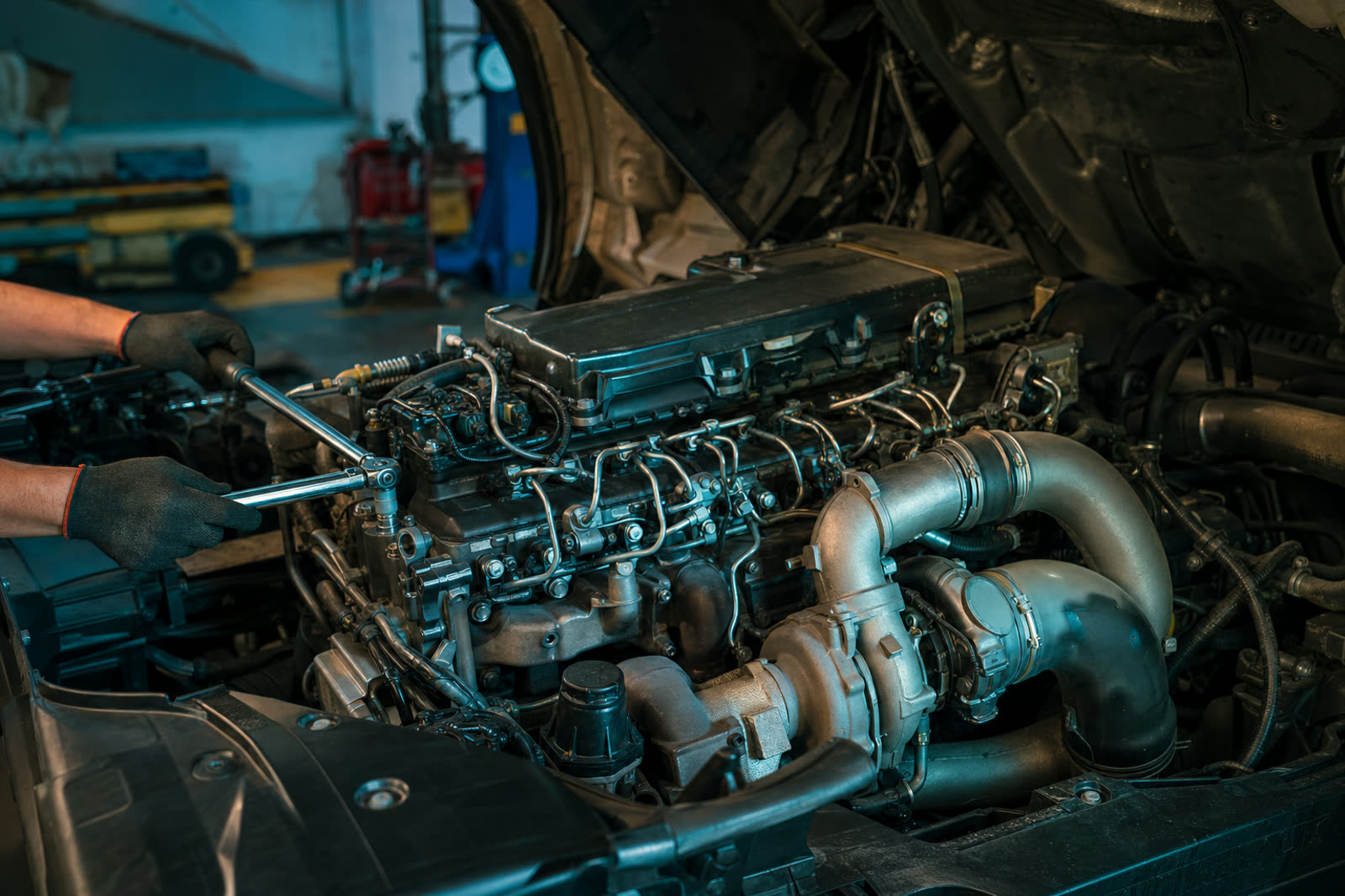
It complements the fuel card, it does not compete with it.
Lever one reduces the price you pay per litre and shows you where the litres go. Lever two aims at the number of litres burned. An operator running both is attacking the same bill from two directions, and using the data from the first to judge the second.
X-Carbon works in any engine running petrol, diesel or kerosene, which in practice means vans, HGVs, plant and static equipment can all be in scope. That breadth is useful for a mixed depot fleet — and it is another reason to trial on a defined sample rather than switching everything at once.
Source: RunGreen — about X-Carbon.
Ask for an introduction to Run-Green International.
Tell us roughly what you run and what you would want to prove. Nothing here commits you to anything, and we quote no figures.
Fuel efficiency enquiry
Lever 2 · Run-GreenYour details are passed to Run-Green International so they can contact you about X-Carbon and how a trial on your vehicles would be set up.
Submitting this form asks CouriersDepot.com to pass your details to Run-Green International. Justin Cox acts as an agent for Run-Green. Any technical advice, trial design, quotation, supply agreement or decision to proceed is a matter between you and Run-Green. We give no advice, quote no prices and guarantee no savings, and any performance figures you see are Run-Green's own published claims.
Test it on your own vehicles before you believe anybody.
Including us. A measured trial on part of the fleet is the only figure that should change how you spend.
Introducer and agent for Run-Green International. No financial, insurance or energy advice, no contracts arranged, no savings guaranteed. Performance figures shown are Run-Green's own published claims.